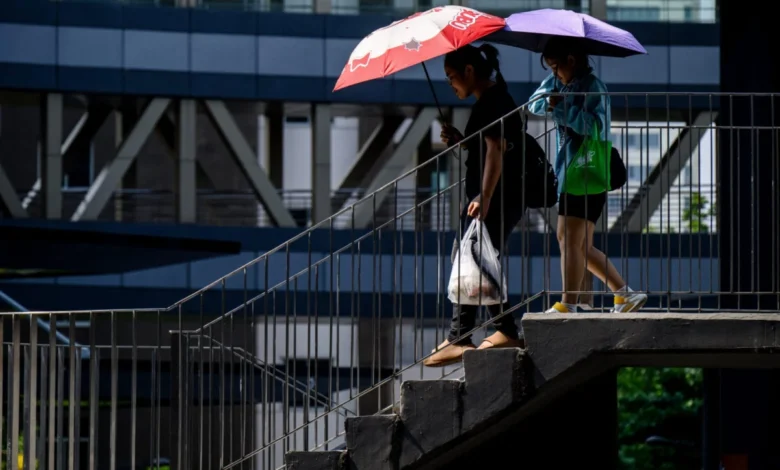
Bangkok, a city synonymous with vibrant street life and bustling commerce, is facing an increasingly urgent threat: extreme heat. In late June, the city’s heat index soared to a blistering 51.9 degrees Celsius, capping a prolonged period of dangerous temperatures that began in April. While many residents endured this sweltering reality as just another uncomfortable day, for policymakers and city leaders, including the recently re-elected Bangkok Governor Chadchart Sittipunt, it serves as a stark reminder of the escalating dangers posed by rising urban temperatures. This phenomenon is not merely an inconvenience; it is a fundamental reshaping of how a city functions, impacting everything from outdoor work and business operations to tourism and the very livability of the metropolis.
The Growing Threat of Urban Heat in Southeast Asia
Bangkok is not an isolated case. Rapidly warming cities across Southeast Asia are already grappling with the immediate and long-term consequences of a hotter planet. Projections indicate that Bangkok’s average daily maximum temperature is set to climb significantly. By 2050, it is expected to reach 38.1 degrees Celsius, a substantial increase from the 33.3 degrees Celsius recorded in 2000. This trajectory represents one of the steepest temperature rises forecasted for any major Southeast Asian capital. The ASEAN Centre for Energy further predicts a near tripling of "extreme heat days"—those exceeding 35 degrees Celsius—to approximately 120 days per year by mid-century. This escalating frequency of intense heat waves poses a profound challenge to urban infrastructure, public health, and economic stability.
Economic and Social Ramifications of Rising Temperatures
The economic fallout from this relentless heat is already significant and is projected to worsen considerably. According to the World Bank, a mere one-degree Celsius rise in Bangkok’s average temperature could translate into over 2,300 additional heat-related deaths annually. Beyond the tragic human cost, the economic burden is substantial, with an estimated loss of more than 44 billion Thai baht (approximately $1.3 billion USD) in wages due to reduced labor productivity. Furthermore, the increased demand for cooling will drive up electricity costs by roughly 17 billion Thai baht ($509 million USD) per year.
Key sectors underpinning Thailand’s economy are particularly vulnerable. Tourism, manufacturing, agriculture, and construction are all susceptible to the adverse effects of extreme heat. Outdoor workers face shortened productive hours, businesses incur escalating costs for air conditioning, and the city’s overall competitiveness as a place to live, work, and visit is threatened. These economic impacts are expected to be a central theme during the upcoming 2026 meetings of the International Monetary Fund and World Bank Group, scheduled to be held in Thailand in mid-October—the first time the prestigious event has returned to the nation since 1991. The city’s ability to manage and adapt to its intensifying heat will undoubtedly be a topic of considerable discussion amidst the robust air conditioning of the conference halls.
Bangkok’s Response: From Reactive Measures to Proactive Planning
In recognition of the growing threat, Bangkok has not been idle. The Bangkok Metropolitan Administration (BMA) has implemented measures under its Urban Heat Management Framework. These initiatives include establishing over 300 cooling centers to provide immediate relief during heat waves, deploying hydration stations, issuing heat-health advisories, and identifying 379 heat-risk zones to guide emergency response efforts. These measures demonstrate a commitment to addressing the immediate needs of the population during periods of extreme heat.
However, as the frequency and intensity of heat waves increase, these reactive emergency measures may prove insufficient for long-term resilience. While cooling centers offer temporary respite, they do not address the underlying issue of rising ambient temperatures. They provide relief during a crisis but do little to mitigate the heat experienced in the weeks or years that follow. The fundamental shift required is from a reactive approach to a proactive strategy—one that prioritizes designing cities to withstand and adapt to the heat they are already experiencing and will continue to face.
The Imperative of Data-Driven Investment and Innovative Solutions
Effective heat resilience hinges less on the speed of immediate responses and more on the foresight and quality of long-term planning. This necessitates a strategic redirection of investments towards areas where they will have the greatest impact. The World Bank highlights a critical gap: current cooling initiatives in Bangkok are not adequately benefiting the hottest neighborhoods due to a lack of integration of detailed microclimate data into urban planning processes. Understanding the nuanced variations in temperature across different urban microclimates is crucial for targeted interventions.
One promising approach being explored globally is the use of digital tools. Singapore’s Digital Urban Climate Twin, for instance, allows planners to simulate the impact of various mitigation measures, such as tree planting and the creation of ventilation corridors, before committing significant public resources. This digital modeling has already provided quantifiable evidence for what was once intuitive knowledge: the cooling effect of a single park can extend up to a 300-meter radius. This is particularly significant in urban environments where the heat island effect can elevate temperatures by as much as seven degrees Celsius. While researchers caution against over-reliance on tree planting, leading to diminishing or even counterproductive returns, the principle of using data to guide interventions remains sound. Bangkok can adapt this principle, focusing on evidence-based investments that yield the most significant benefits.
Bridging the Adaptation Finance Gap
Beyond strategic planning, financing is a critical component of building a heat-resilient city. The scale of investment required to adapt to climate change, particularly in mitigating the impacts of extreme heat, often exceeds the capacity of municipal budgets alone. Cities need a robust pipeline of investable resilience projects, underpinned by reliable data and clear policy signals, to attract both public and private capital.
The financial challenge is substantial. A 2025 analysis by the Climate Policy Initiative revealed that Southeast Asia requires an estimated $20 billion USD annually for adaptation investments but currently receives only about $2.5 billion USD. This represents an 88 percent shortfall, one of the widest adaptation finance gaps observed in any subregion across Asia. Addressing this deficit will require innovative financing mechanisms, stronger partnerships between public and private sectors, and a clear articulation of the long-term economic benefits of investing in climate resilience.
Governor Chadchart’s Opportunity: A Legacy of Heat Adaptation
With his recent re-election and a strong mandate from the electorate, Governor Chadchart Sittipunt has a unique opportunity to elevate heat adaptation as a signature priority of his second term. Bangkok has demonstrated its capacity to react swiftly and decisively when faced with immediate heat crises. The true test, however, lies in its ability to move beyond reactive measures and embrace deliberate, forward-looking investments. This means strategically planning and building a city that is not only functional today but is inherently resilient to the escalating heat of tomorrow. The future livability and prosperity of Bangkok depend on this crucial shift towards designing for a hotter climate.